

Takanaka Fever Sweeps the States
Last week I was lucky enough to see Masayoshi Takanaka live at the Aragon Ballroom. Let me tell you, I never expected to see him live — he’s getting up there in age and doesn’t really play the U.S. much. But what I really didn’t expect was that crowd. I guess the kids are into jazz fusion now.
The place was packed with young people. Honestly, it felt more like an EDM show than a jazz fusion gig — people were going crazy, dancing the whole time, and there wasn’t an old head in sight. If you don’t know Takanaka, he’s a legendary Japanese guitarist from the 70s, playing mostly instrumental jazz fusion with this bright, tropical vibe — not exactly what you’d expect to draw that kind of crowd. The group next to us looked like they were in college and didn’t stop moving the entire show. I saw people rocking his famous red suit, others in Hawaiian shirts — it felt like people really showed up for the moment. This wasn’t just another concert; it felt like an event.
After the show, people were outside taking pictures in front of the Aragon sign that read “Masayoshi Takanaka Tonight.” I know because some guy with a film camera handed me his camera and asked me to take a big group photo. No idea how that turned out, but I hope I nailed it. For a guy pushing 70+, that kind of turnout is pretty insane. The show sold out immediately, and honestly, I was just happy to be there and witness it — seeing him in the U.S. in front of a whole new generation of fans.
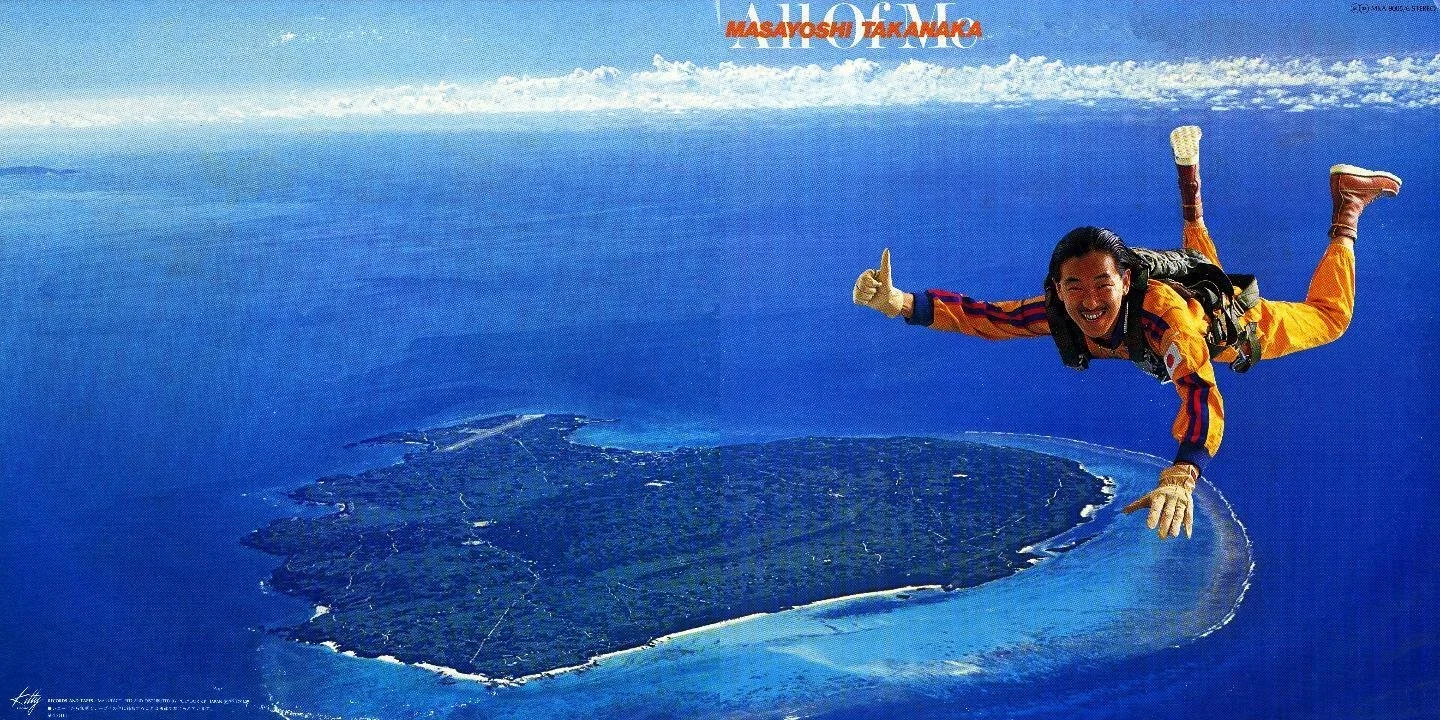
Cover of All of Me the greatest hits for Masayoshi Takanaka
Takanaka came up in the early 70s playing in bands like Flied Egg and later Sadistic Mika Band, which were a big part of that early Japanese rock and fusion scene. By the late 70s he went solo and really found his sound — bright, melodic guitar lines with this tropical, feel-good energy. It’s a mix of jazz fusion, funk, samba, rock, and what we now call city pop. Instead of relying on vocals, he let the guitar take the lead, and it ends up feeling like the instrument is actually singing.
He really hit his stride in the late 70s and early 80s with albums like Seychelles, Brazilian Skies, and The Rainbow Goblins. That last one is especially wild — a full concept album based on a children’s story, with narration and these big, theatrical live performances where the band would dress up. He wasn’t just a guitarist; he was an entertainer. Surfboard guitars, crazy stage ideas, TV appearances — he had this sense of humor and personality that made everything feel fun and alive.
Back then, his audience in Japan was tied into this surf and carefree lifestyle culture — young people chasing that feeling of freedom, driving, going out, living a little looser. His music fit that perfectly. And he was putting out music constantly, sometimes multiple albums a year, which just added to how big he got during that era.
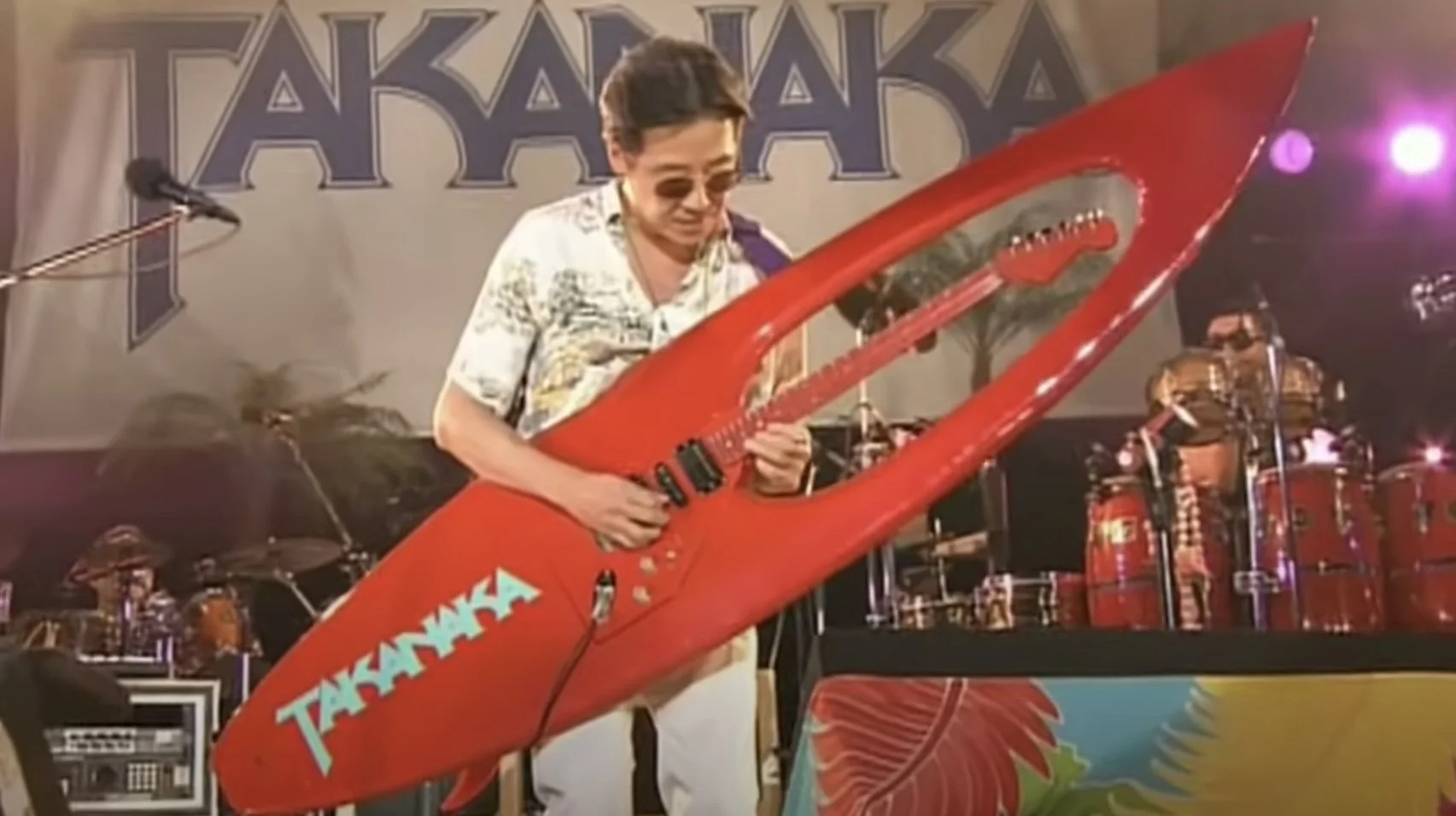
Takanaka’s Famous Surfboard Guitar
Then, like a lot of artists from that time, things cooled off a bit globally. He kept making music, evolved with the times, even started his own label, but outside of Japan, he was kind of under the radar for a long time.
Now fast forward to the last few years and somehow he’s back in a big way. YouTube algorithms, Spotify playlists, and the whole city pop resurgence have introduced his music to a completely new audience. Younger listeners are finding it without any nostalgia attached — it just sounds fresh to them. It’s upbeat, melodic, not overproduced, and honestly just feels good to listen to.
And that’s what made that show so interesting. It didn’t feel like a legacy act or a nostalgia crowd — it felt like the internet had fully caught Takanaka fever, and everyone was there for it. This wasn’t their parents’ music, it felt like it belonged to this moment. Seeing someone who built their career decades ago connect with a whole new generation like that was pretty incredible.
