

Boston’s Party Band: Live and Ready to Blow Your Face Out
For years now, my favorite ’70s live album has been REO Speedwagon’s LIVE: You Get What You Play For. And whenever I tell people how much I love REO, they usually jump straight to the ’80s hits. That’s fair, those songs are everywhere. But the band had a full decade of rock ’n’ roll under their belt before they ever went full wedding-song mode with “Keep On Loving You.”
What really makes LIVE: You Get What You Play For so great, beyond the fantastic songs and playing, is the live feel. It sounds like a party. You don’t just hear the band, you hear the room. It feels loose, sweaty, and human. You feel like you’re in it.
For a long time, I’ve been chasing that same feeling in a live record.
That search is what finally led me to the J. Geils Band, and I honestly can’t believe it took me this long. Like REO Speedwagon, I only really knew them for their ’80s hits “Freeze-Frame” and “Centerfold.” Growing up in Chicago, those songs were unavoidable, and I always thought of the J. Geils Band as nothing more than a two-hit wonder from the MTV era.
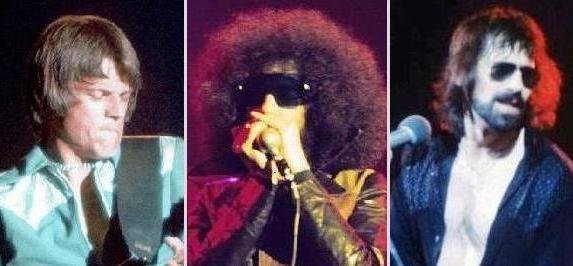
L-R: J. Geils, Magic Dick, Peter Wolf
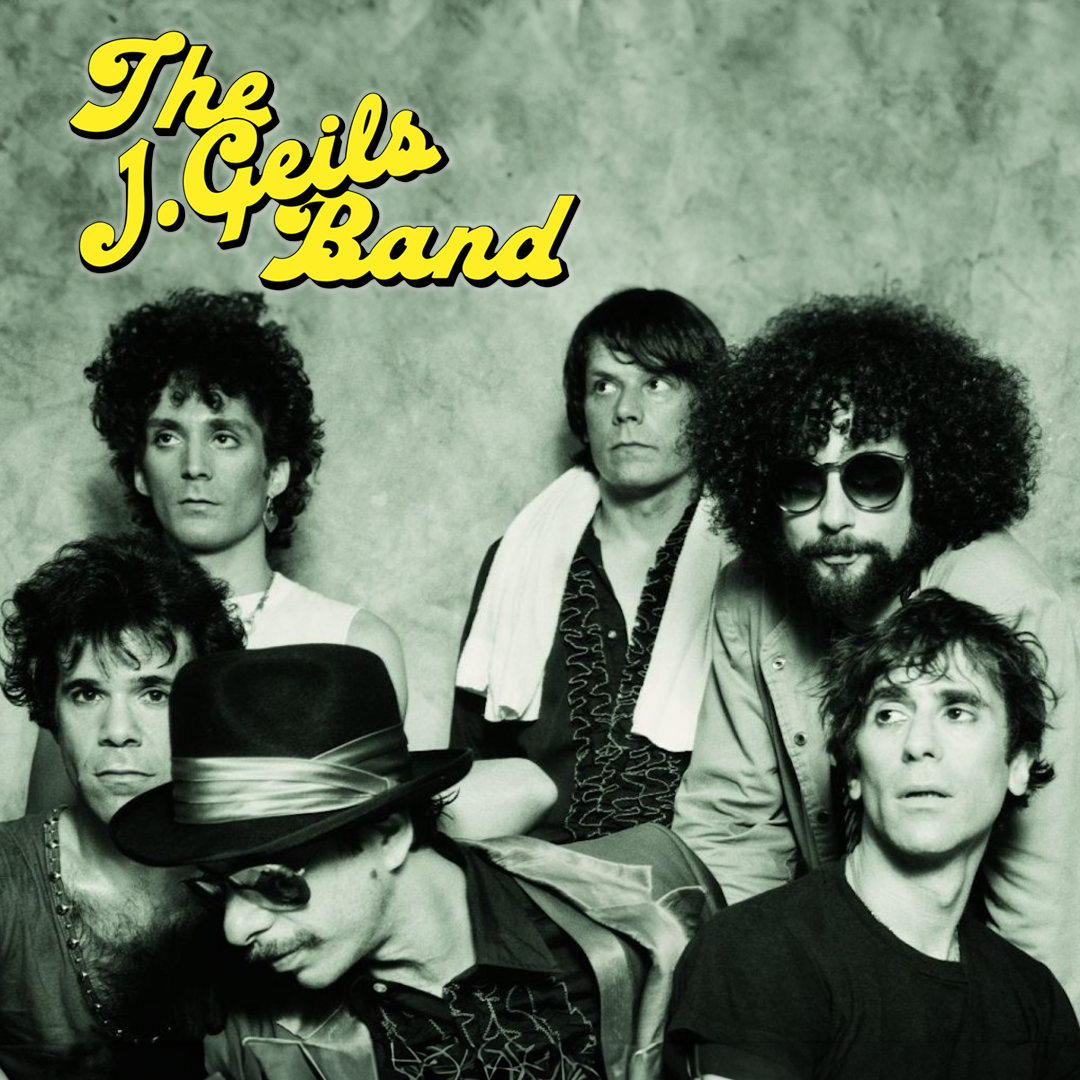
Long before the hits, the J. Geils Band built their reputation the old-fashioned way, by destroying rooms night after night. At their core, they were a blues band that learned how to turn the blues into a full-on party. Frontman Peter Wolf brings a Stones-like swagger and nonstop storytelling, but there’s humor in it too. He’s not just singing songs — he’s working the crowd, talking to them, pulling them in, and making the show feel like a shared experience.
The band’s roots go back to Boston in the late ’60s, where guitarist Peter Geils, bassist Danny Klein (“Dr. Funk”), and harmonica player Richard Salwitz (“Magic Dick”) started as an acoustic blues trio under the name Snoopy and the Sopwith Camels. As the world went electric, they followed, adding drummer Stephen Jo Bladd and WBCN disc jockey Peter Blankfield — soon to be known as Peter Wolf. Boston took notice fast.
Their live shows quickly earned them opening slots for artists as diverse as B.B. King, Johnny Winter, The Allman Brothers, and The Byrds. The Allman Brothers even called them their favorite local band. Despite the buzz, the group didn’t rush their career. They took their time, slowly building an audience before releasing their self-titled debut in 1970.
If you want to hear the J. Geils Band still leaning heavily into their blues roots, 1972’s Full House is the place to start. Recorded live, it captures the band before the arenas, when the emphasis was still on raw blues power. Tracks like “Whammer Jammer” put Magic Dick’s harmonica front and center — loud, aggressive, and completely unhinged. The playing is tight, but it still feels dangerous, like the band could fly off the rails at any moment.
By the mid-’70s, that same band had evolved into something bigger and less grounded in the blues without losing their edge. That’s where Blow Your Face Out! (1976) comes in. Recorded at the Boston Garden and Cobo Hall in Detroit, it captures the J. Geils Band at the peak of their powers. Songs stretch out, the crowd becomes part of the show, and Peter Wolf turns tracks like “Must of Got Lost” into full-blown conversations with the audience. “Love-Itis” hits with razor-sharp precision, and even the cover of “Where Did Our Love Go” feels playful instead of gimmicky.
They may not have had the massive ’70s hit run of an Aerosmith, but in a lot of ways the J. Geils Band had more energy, more fun, and more connection with their audience. Their live records don’t feel polished — they feel lived-in. You hear the sweat, the jokes, the crowd noise, the moments where things almost fall apart but never do.
After Blow Your Face Out!, the band would eventually reach massive commercial success with Freeze-Frame in 1981, before Peter Wolf left over creative differences. But the real story of the J. Geils Band lives on those stages and on those live records.
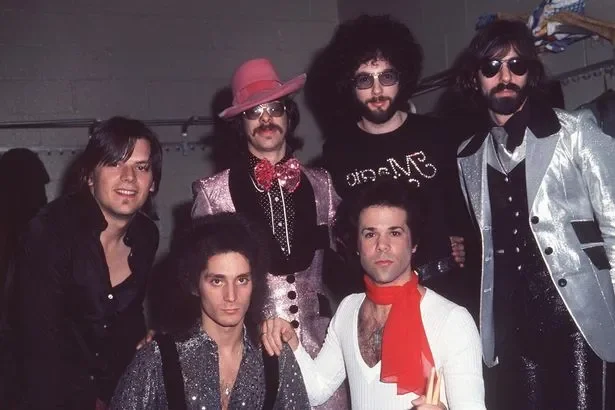
If Full House shows you where they came from and Blow Your Face Out! shows you where they ended up, together they prove one thing: the J. Geils Band was always meant to be heard live. Like REO’s LIVE: You Get What You Play For, these albums don’t just document shows — they drop you right into the middle of the party.
